The same river you float in Jinja comes from somewhere, and the best of Uganda's wildlife lives along it. Murchison Falls, Queen Elizabeth, Kidepo Valley, and the chimpanzee forests of Kibale — four very different parks, all reachable from our front door.
Uganda is where East and West Africa overlap, and the wildlife lists show it.
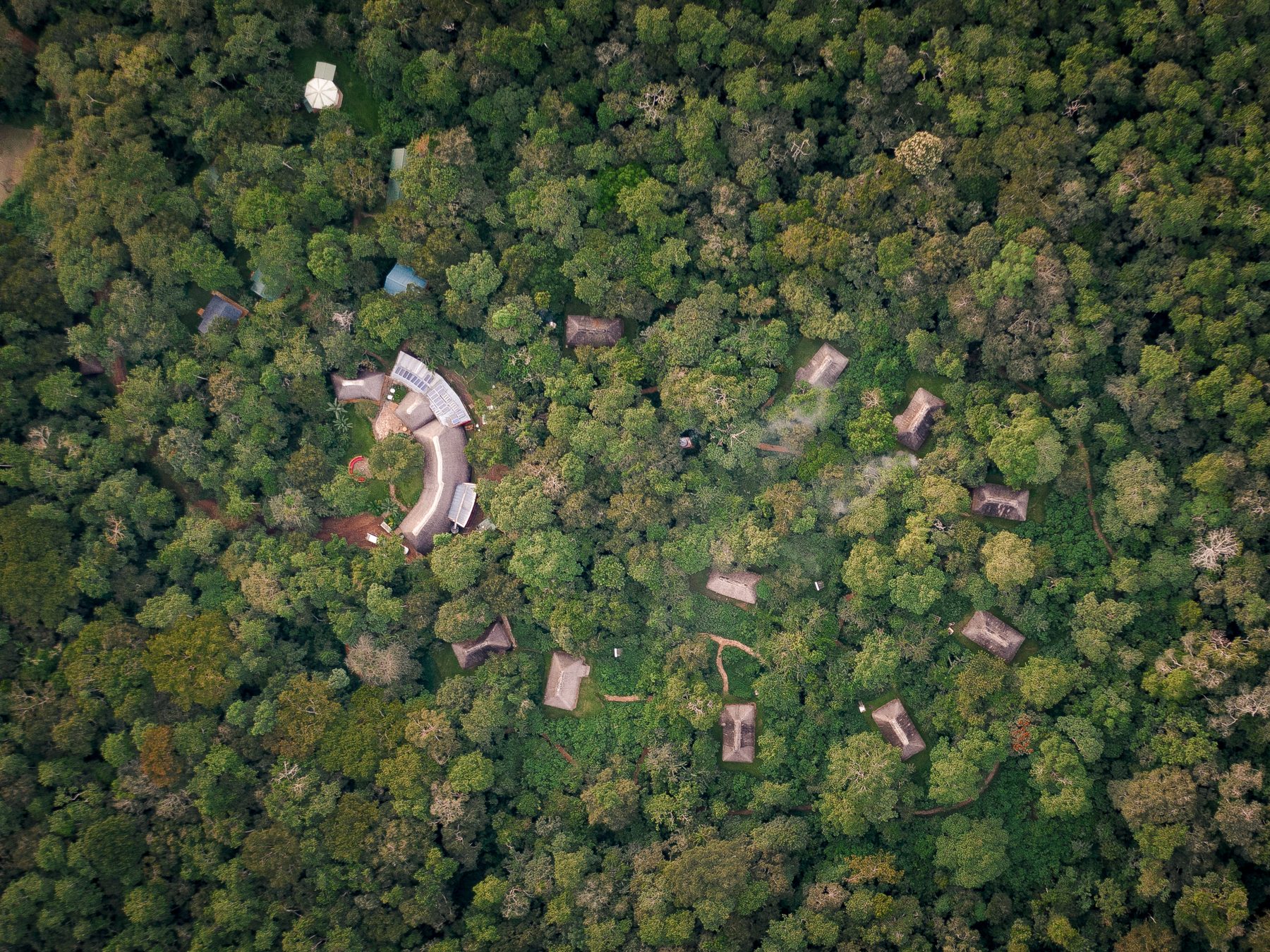
Savannah animals from the east, forest species from the Congo basin, and more bird species than any country its size on earth. You can watch a lion in open grass in the morning and be looking for chimpanzees in closed rainforest two days later. Moses has been guiding here his whole working life — these are his parks, not a brochure.
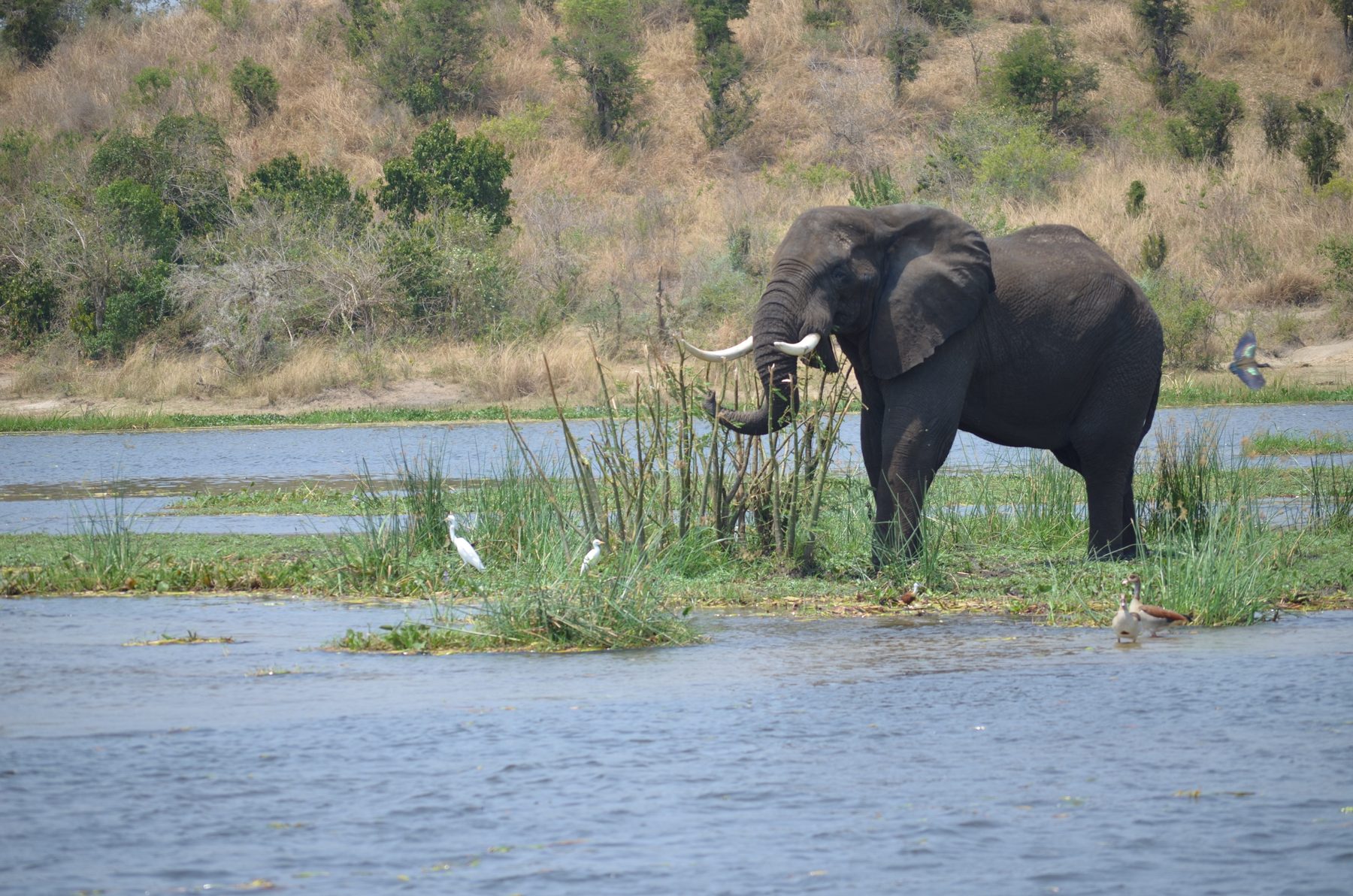
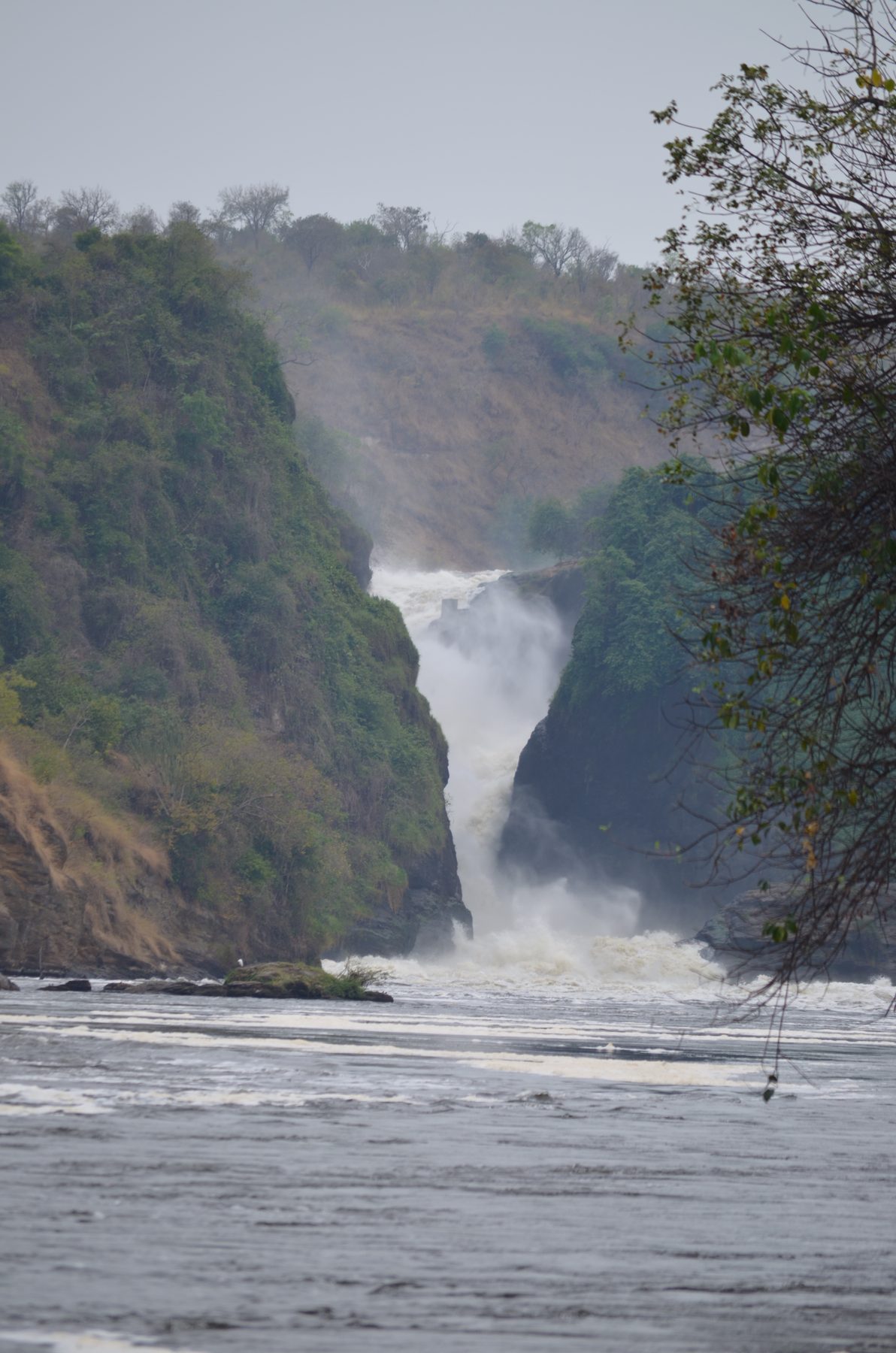
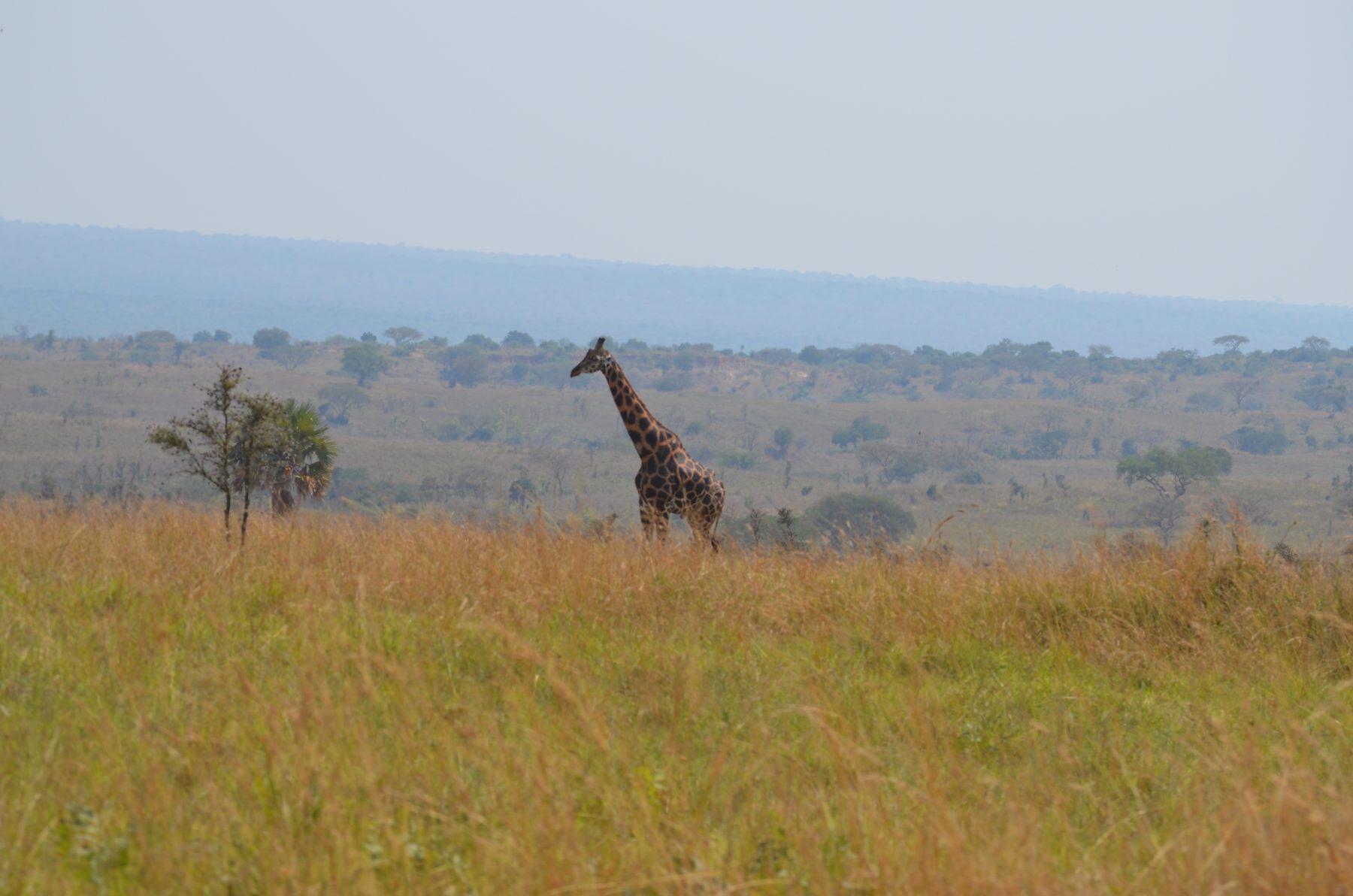
Uganda's largest national park, and the one that ties directly back to what we do in Jinja. The entire Nile is forced through a gorge seven metres wide and drops forty-three metres — the most violent stretch of the river anywhere along its length. You take a boat to the base of it, then game drive the northern plains for lions, elephant, buffalo and Nubian giraffe. On the way up we stop at Ziwa, the only place in the country with wild rhino.
Included: transport, park entry, breakfast, lunch and dinner with drinking water throughout, and accommodation in safari tents.
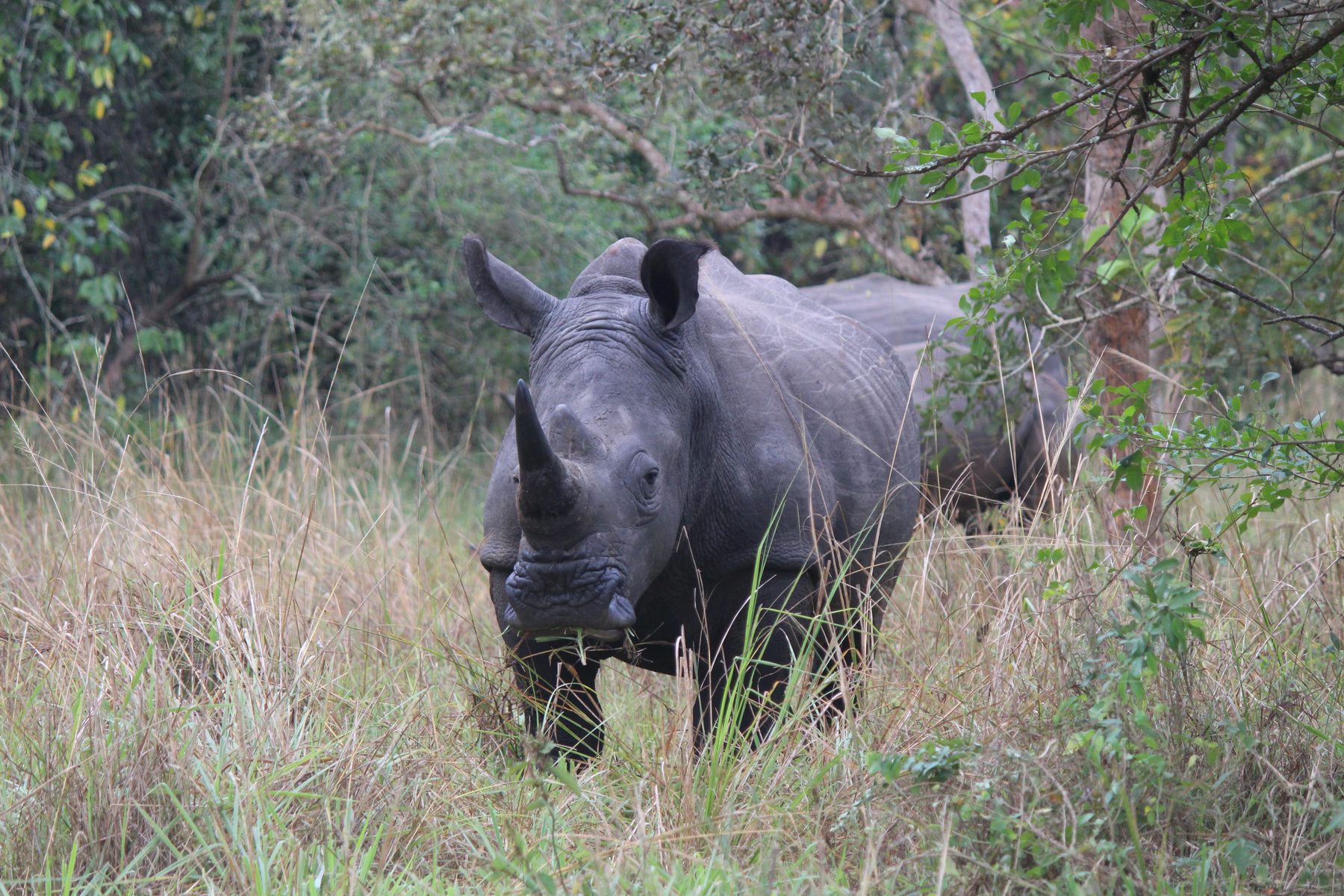
Both of Uganda's rhino species were poached to national extinction by 1983. Every wild rhino in the country today lives at Ziwa Rhino Sanctuary — a reintroduced population of southern white rhino, now over thirty animals, on the road between Kampala and Murchison.
You track them on foot with a ranger. No vehicle, no hide — you walk through the bush until you find them, and then stand a short distance away while they carry on eating. It adds about two hours to the drive north and it is the only way to complete the Big Five in Uganda.
Uganda's most visited park, sitting between two lakes under the Rwenzori Mountains. The Kazinga Channel runs thirty-two kilometres between Lake Edward and Lake George and holds one of the densest hippo populations in the world — you cruise it in the afternoon with elephant and buffalo coming down to drink on both banks. In the far south, the Ishasha sector has lions that spend their days lying in fig trees, which no one has fully explained.
Tucked into the corner where Uganda meets South Sudan and Kenya, surrounded by Karamoja rangeland and mountains on every side. Kidepo gets a fraction of the visitors the southern parks do, which is exactly the point — you can spend a morning in the Narus Valley and not see another vehicle. It is also the only park in Uganda with cheetah and ostrich, and the lion prides here are large and unbothered by people.
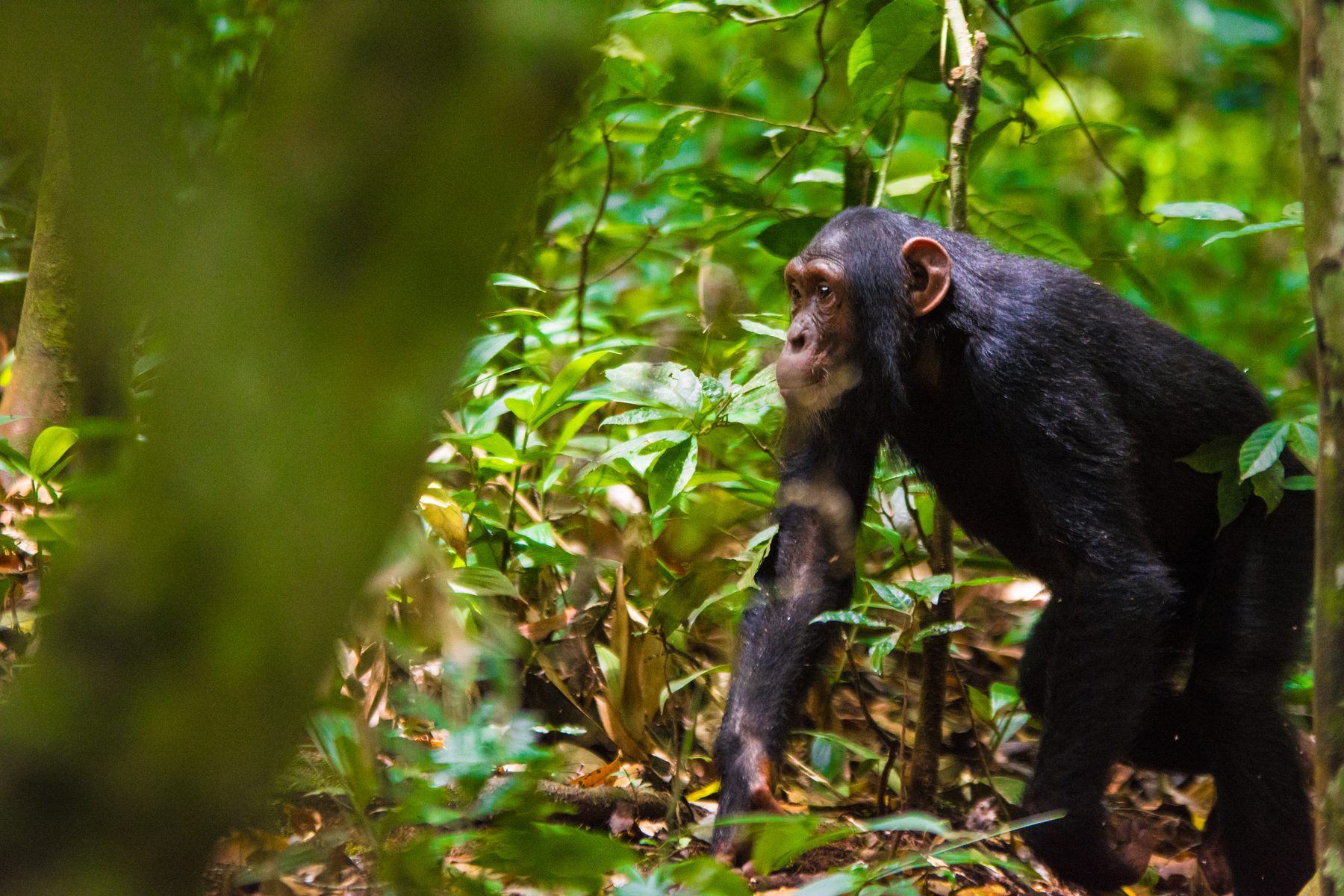
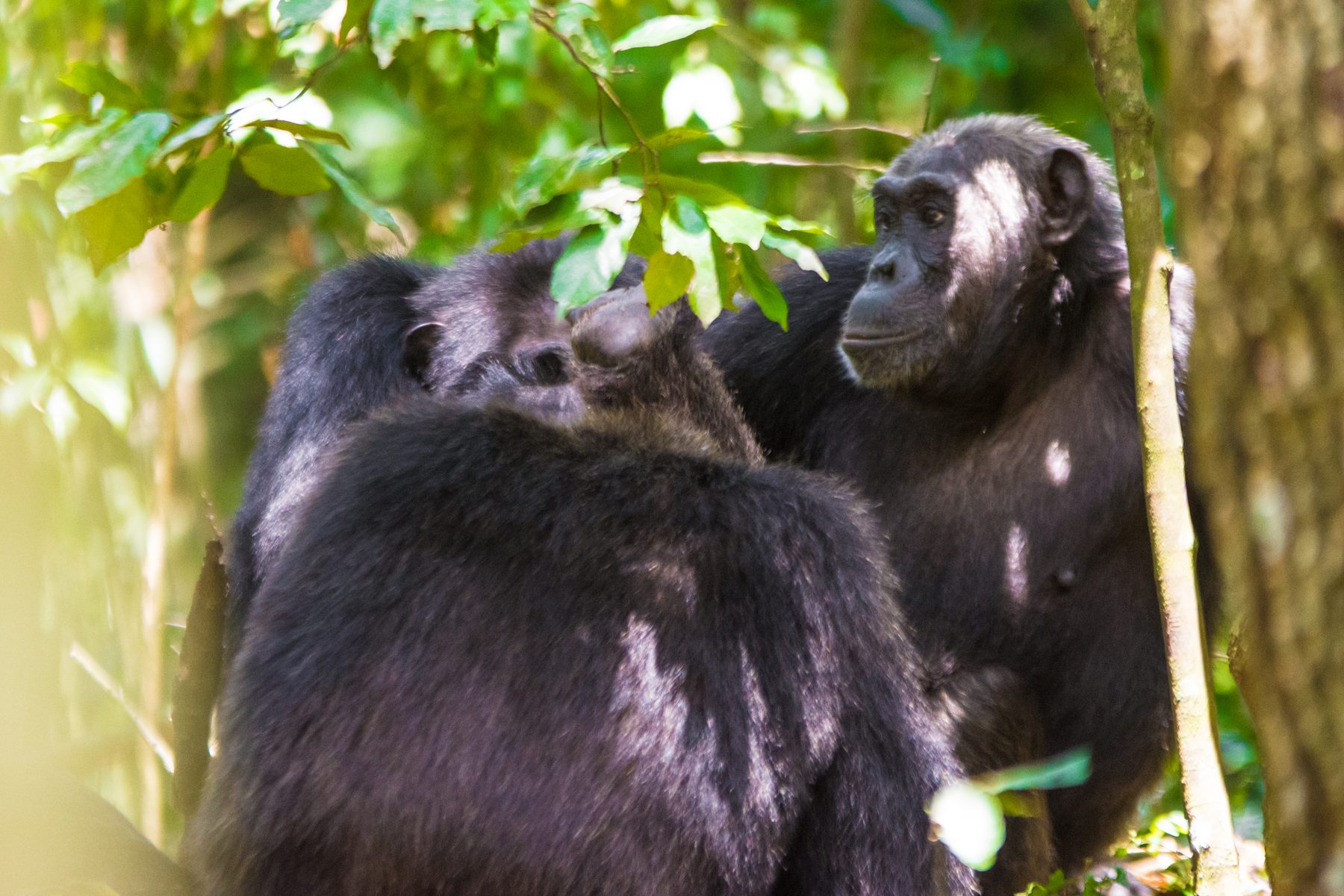
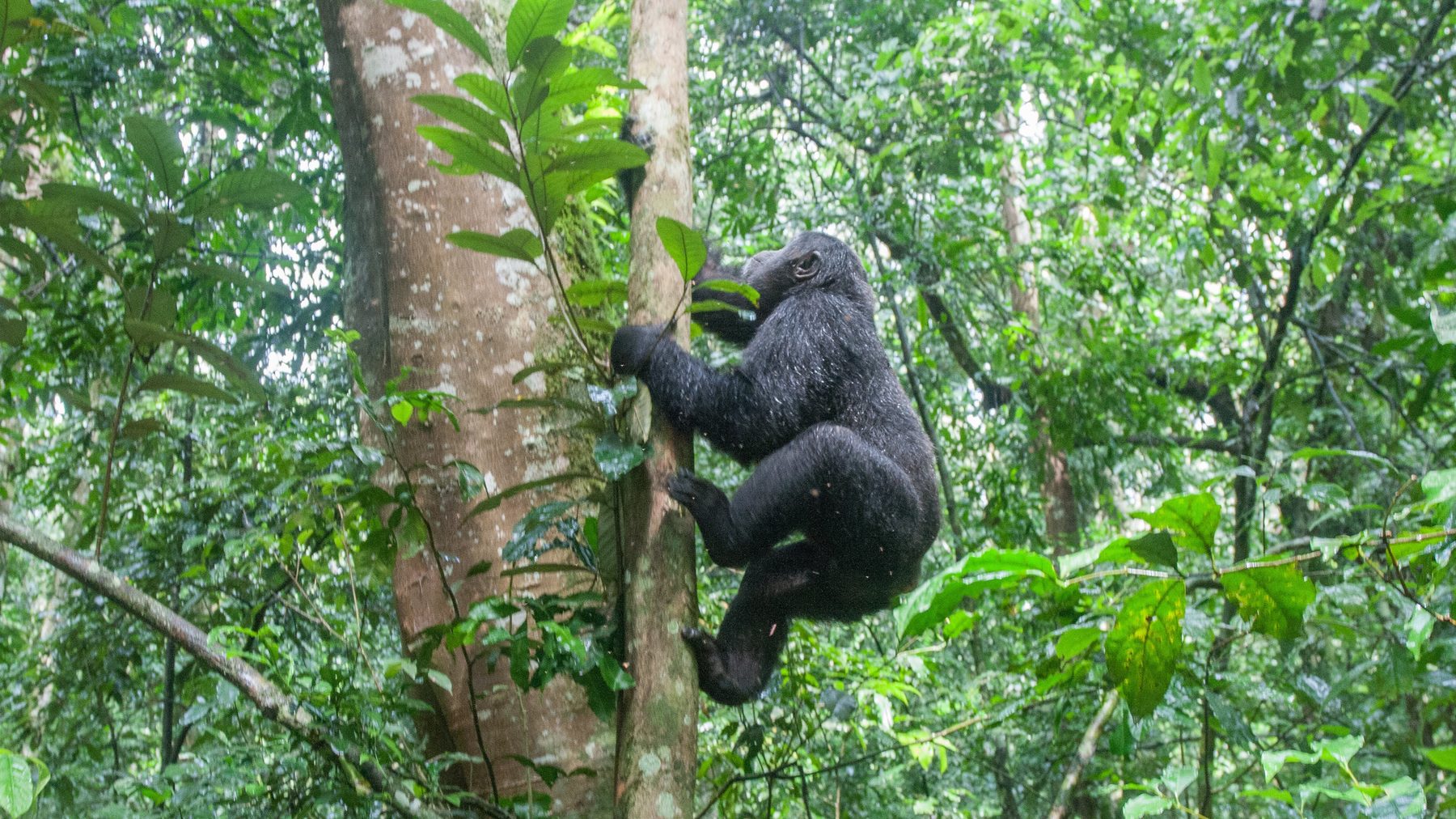
Kibale has around 1,500 chimpanzees and the highest density of primates anywhere in Africa — thirteen species in one forest. The habituated communities here are used to researchers, so you get close. You will usually hear them first: a pant-hoot starting somewhere ahead and picked up across the canopy until the whole forest is shouting. Then you spend an hour watching them feed, groom, argue and move.
No stock images — every animal on this page was photographed by us, most of them at Murchison Falls. Which is also a fair warning: wildlife does not perform on schedule, and nobody can promise you a lion.
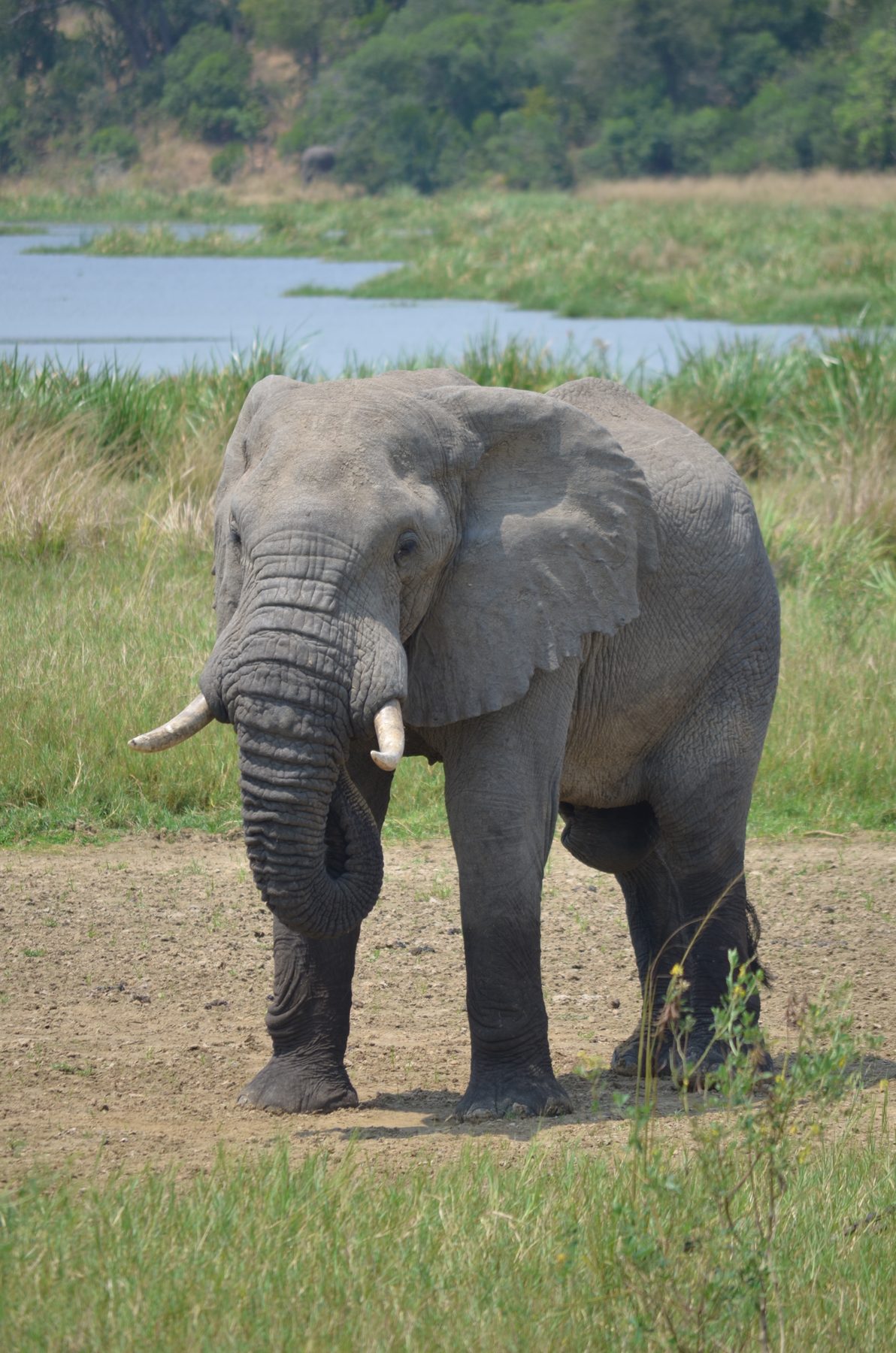
This one was photographed at Murchison, where the northern herds are the easiest to find and the most relaxed around vehicles. Large family groups come down to the water in the late afternoon.
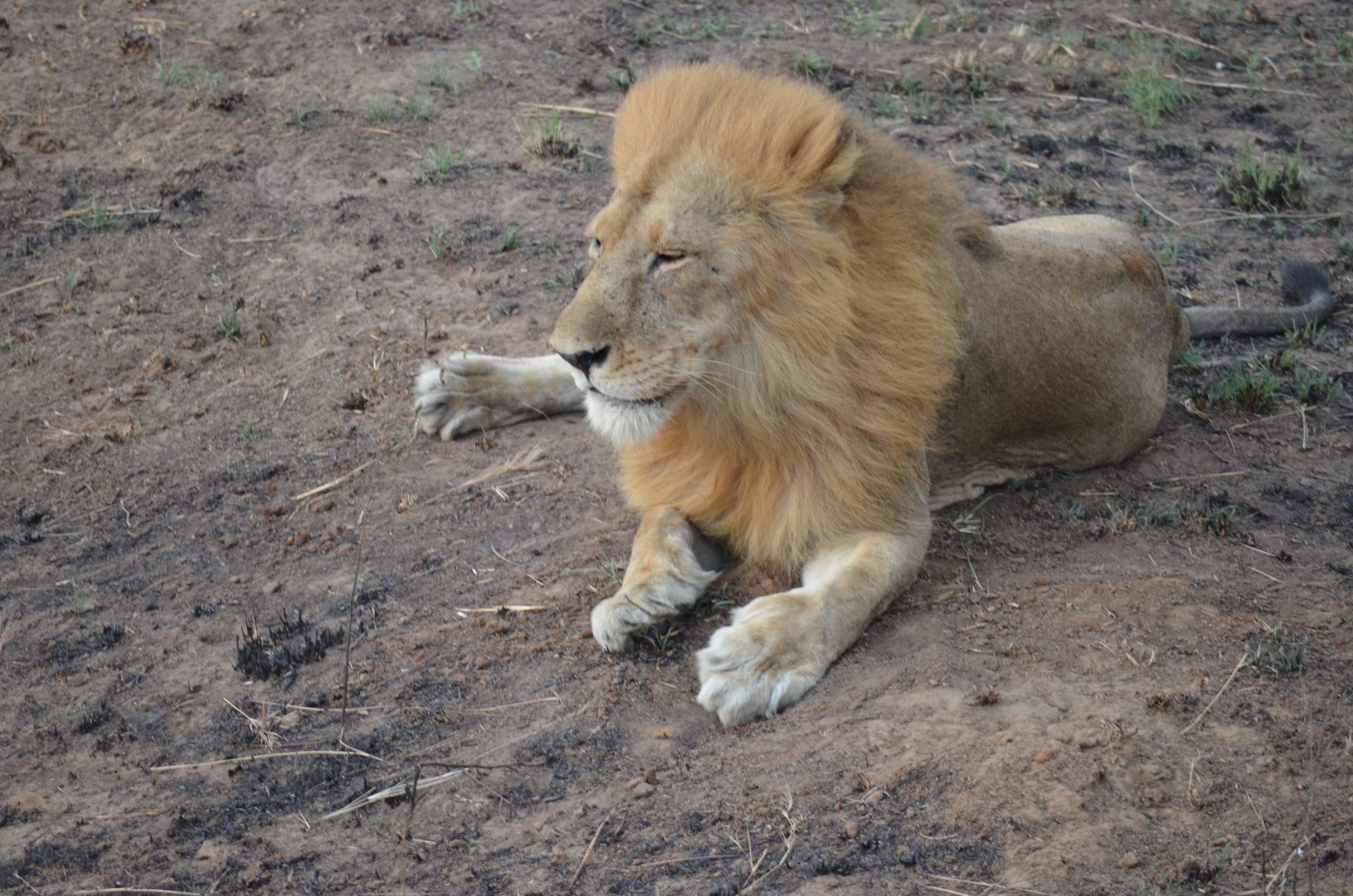
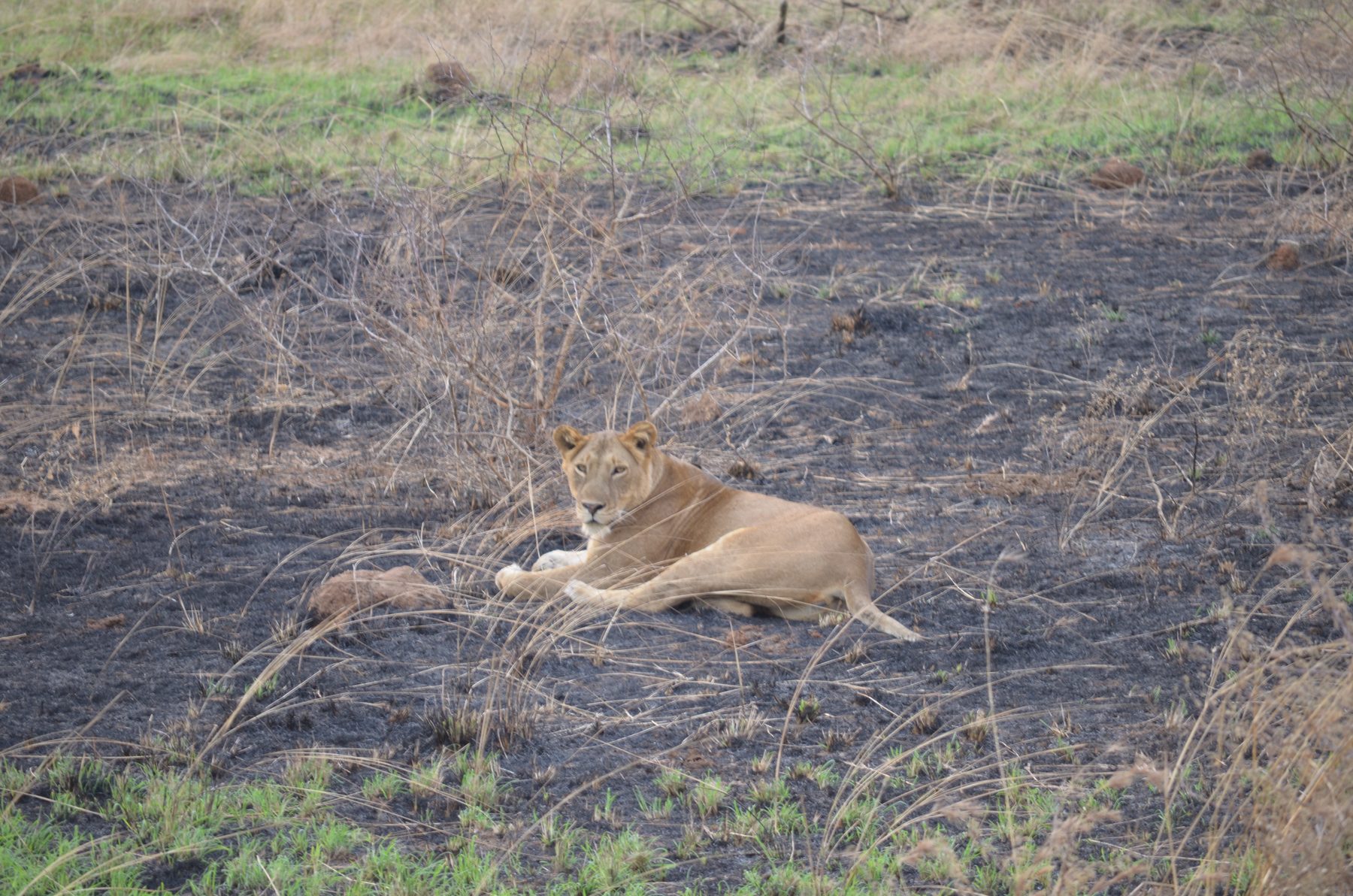
This lioness was resting on burned grass at Murchison. You also find lions at Kasenyi and Ishasha in Queen Elizabeth and in Kidepo's Narus Valley. Early morning and late afternoon drives give you by far the best odds.
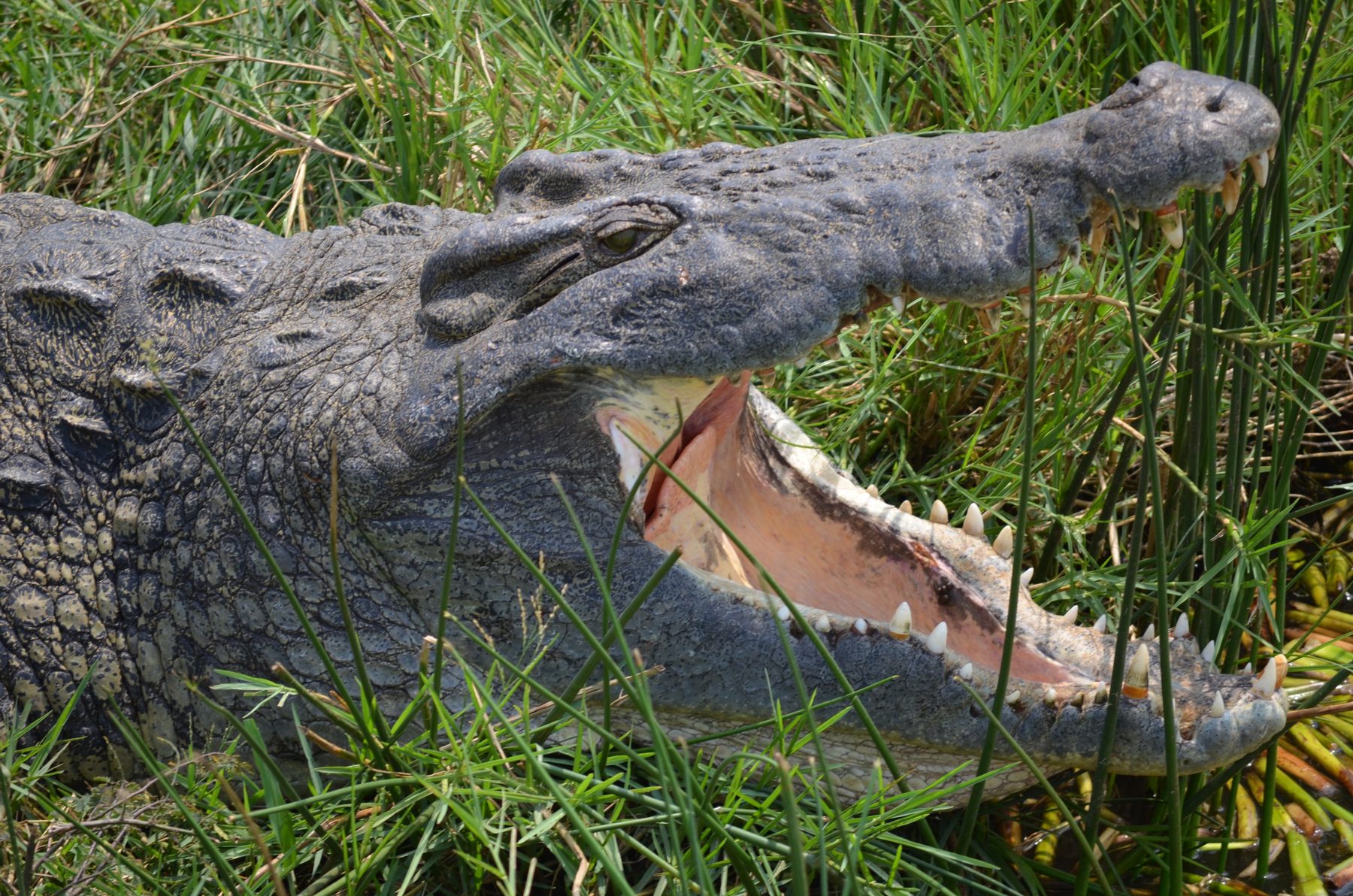
Photographed below Murchison Falls, where the river holds some of the largest crocodiles in Africa — fed for decades by fish stunned coming over the drop. You see them from the boat.
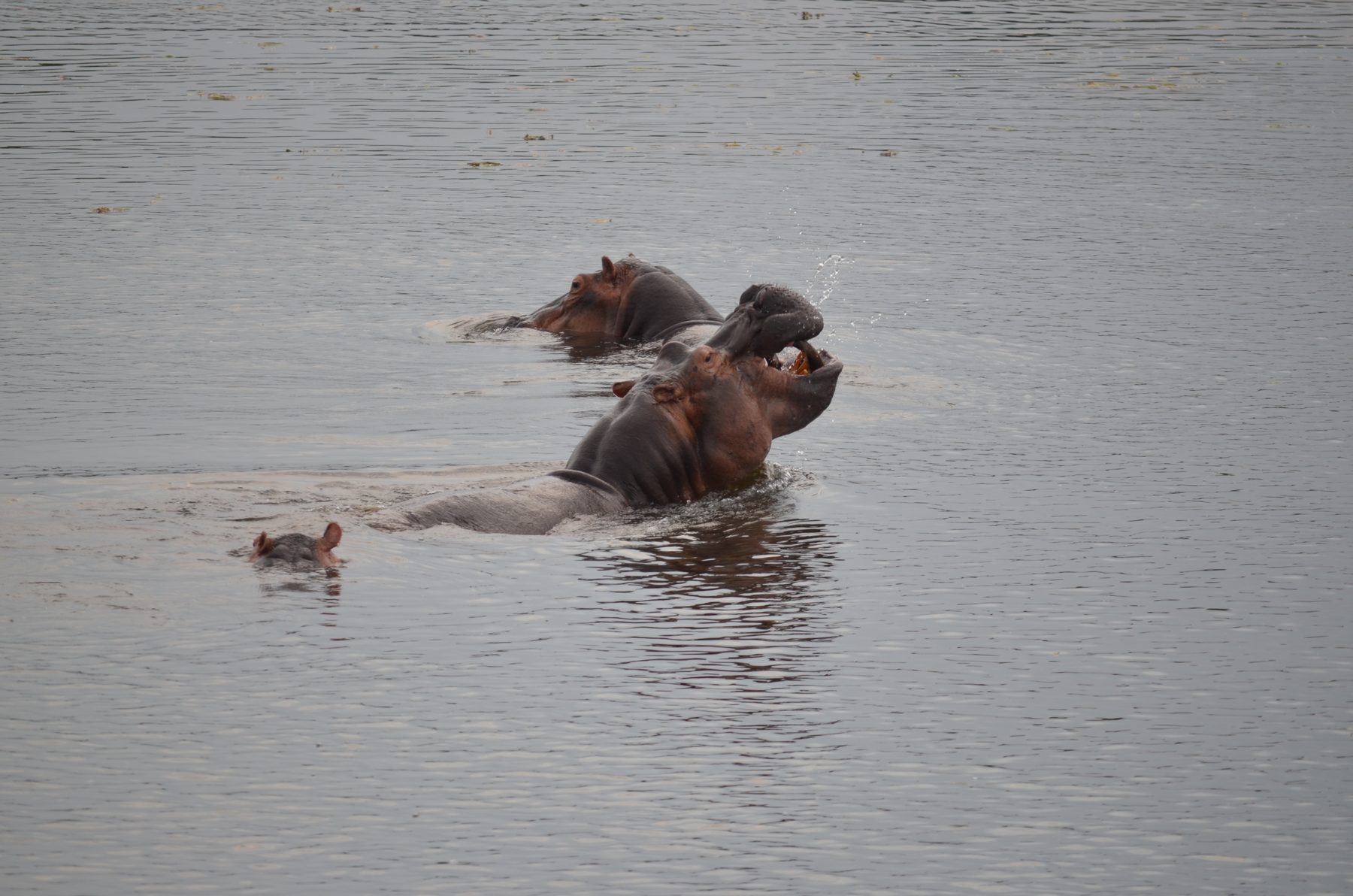
This pod was on the Nile at Murchison. The Kazinga Channel in Queen Elizabeth has one of the highest concentrations on the continent — you hear them at night from the lodges, which is not the peaceful sound people expect.
Photographed at Ziwa on the way up to Murchison — the only place in the country you can see one, and only on foot. A reintroduced population grown from six animals to more than thirty.
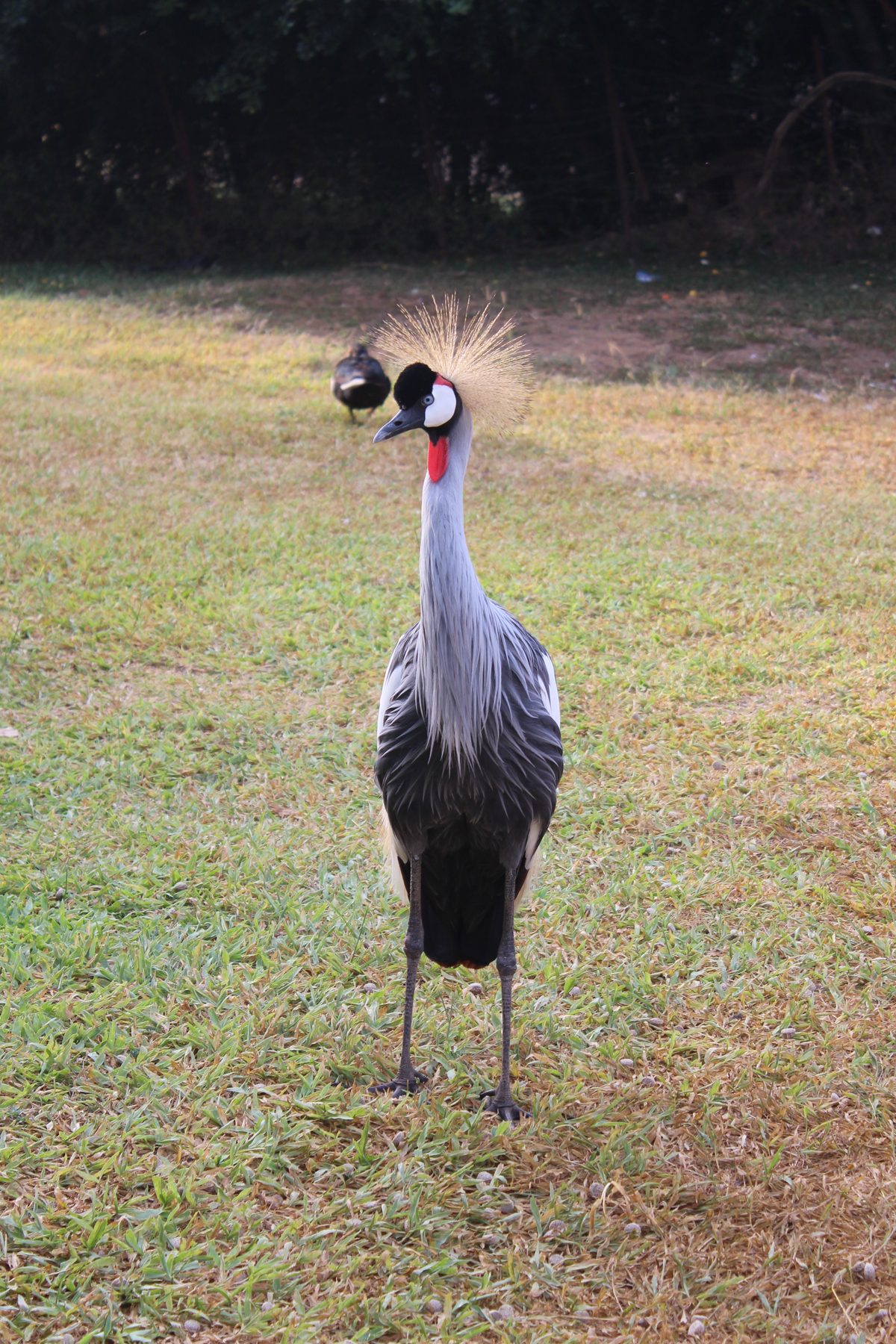
Uganda's national bird, and the one on the flag — this one photographed at Murchison. Endangered, but still regularly seen in wet grassland. Uganda has over 1,000 recorded bird species in total.
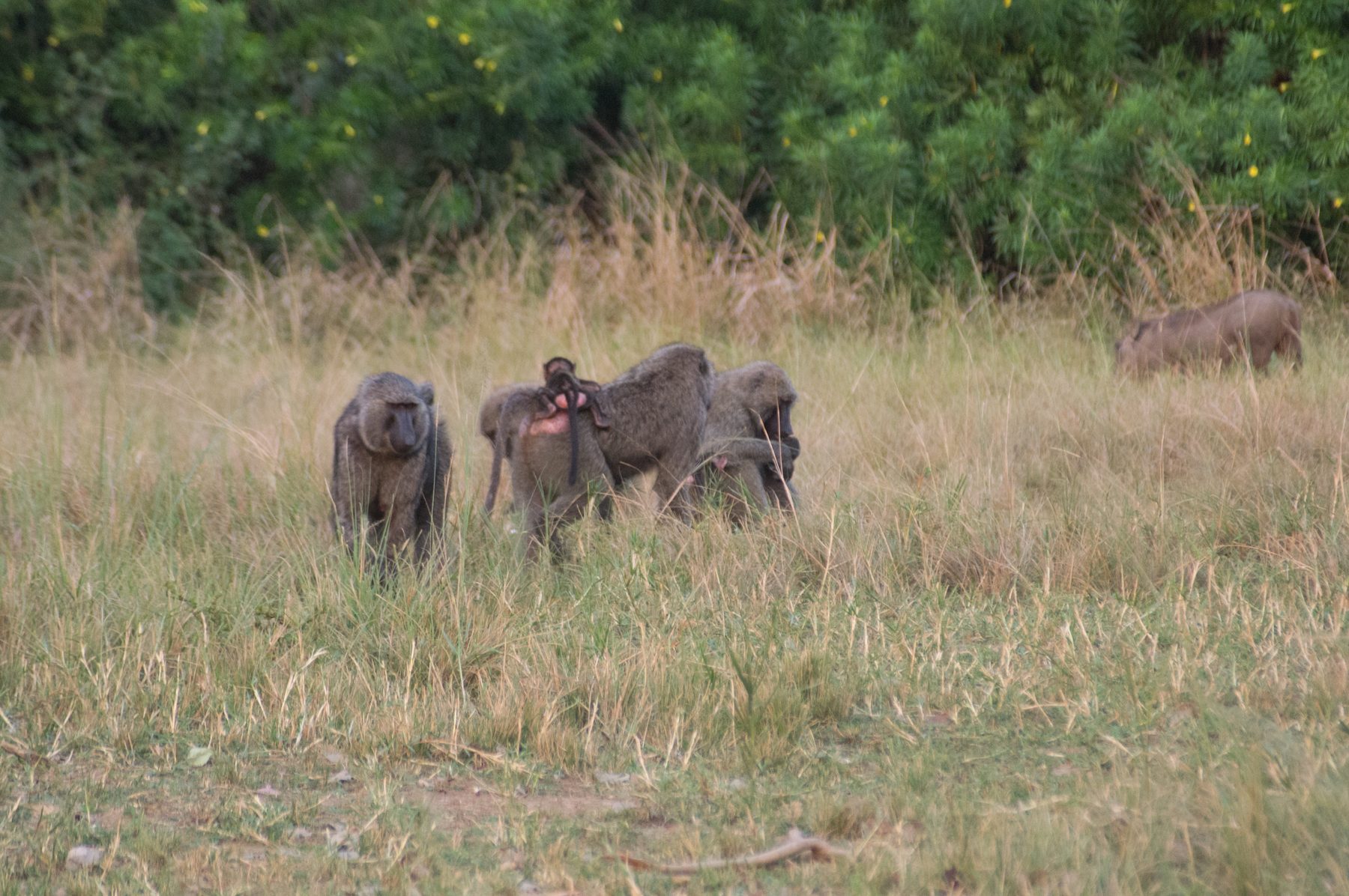
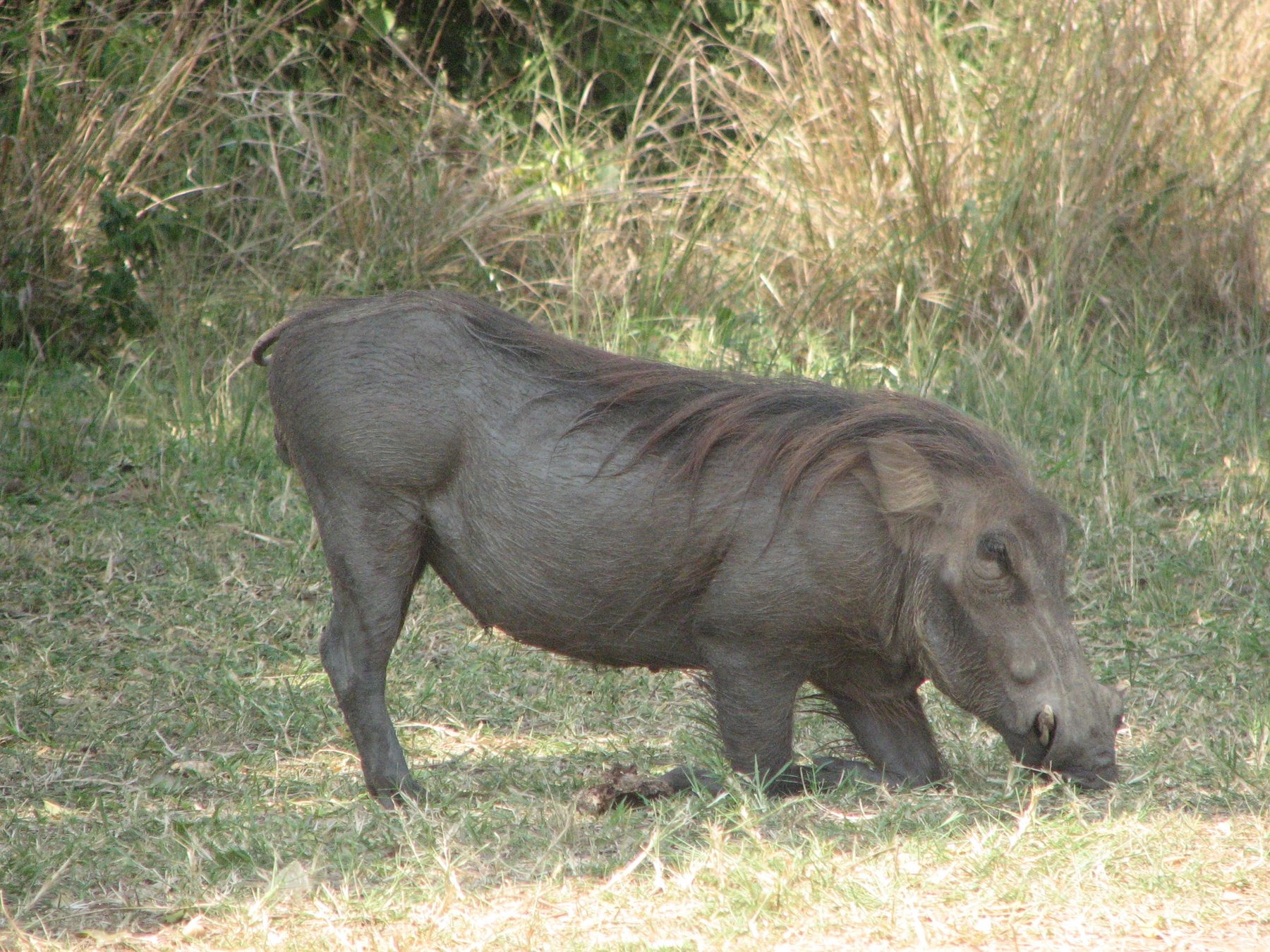
Everywhere, in every park, usually trotting away from you with the tail straight up. Unglamorous and reliably entertaining — often the first animal you photograph.
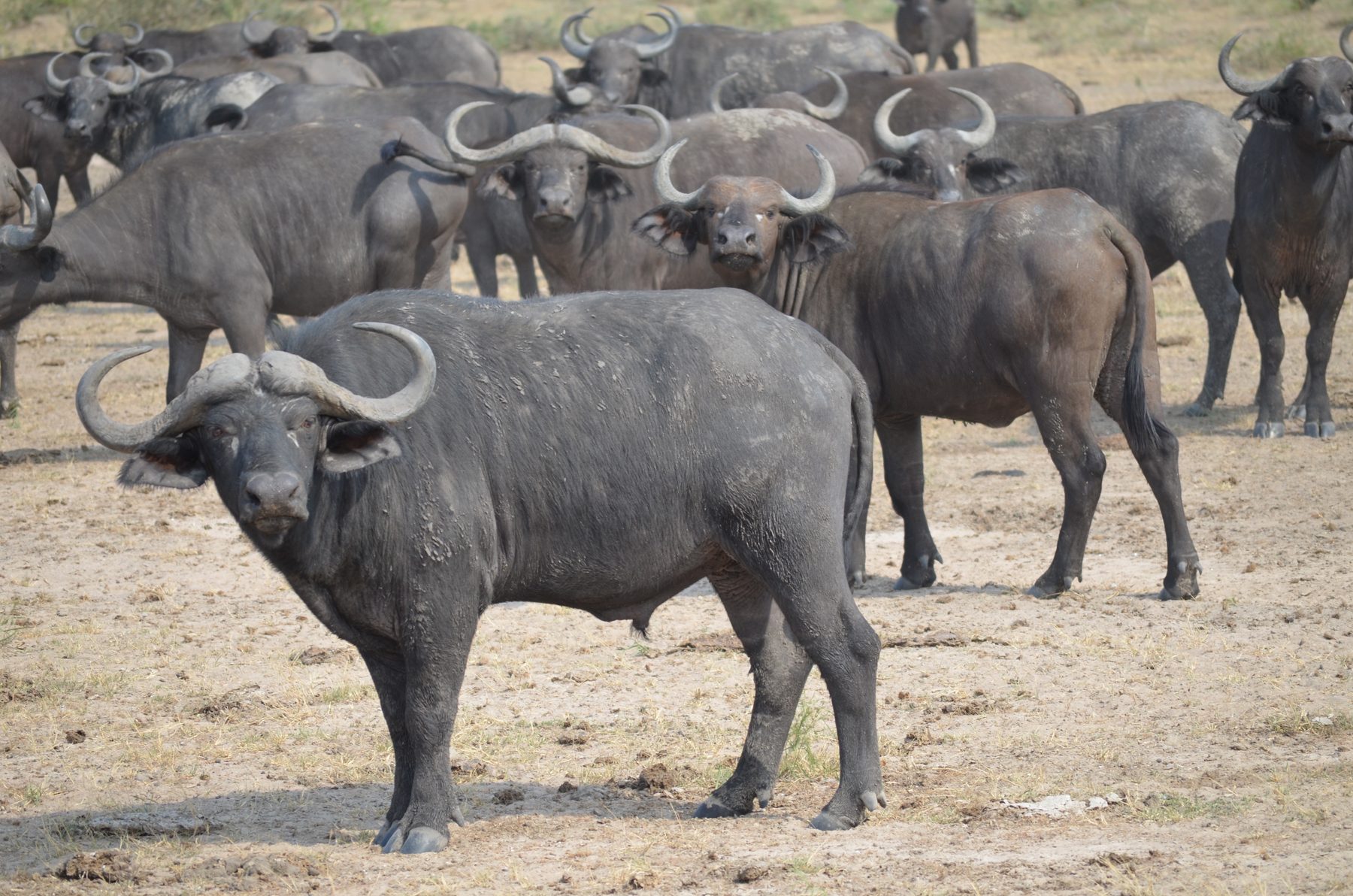
Herds in the hundreds on the Murchison plains and in Queen Elizabeth. They look placid, and they are the animal rangers respect most — the one standing at the front of this herd is watching you, not posing.
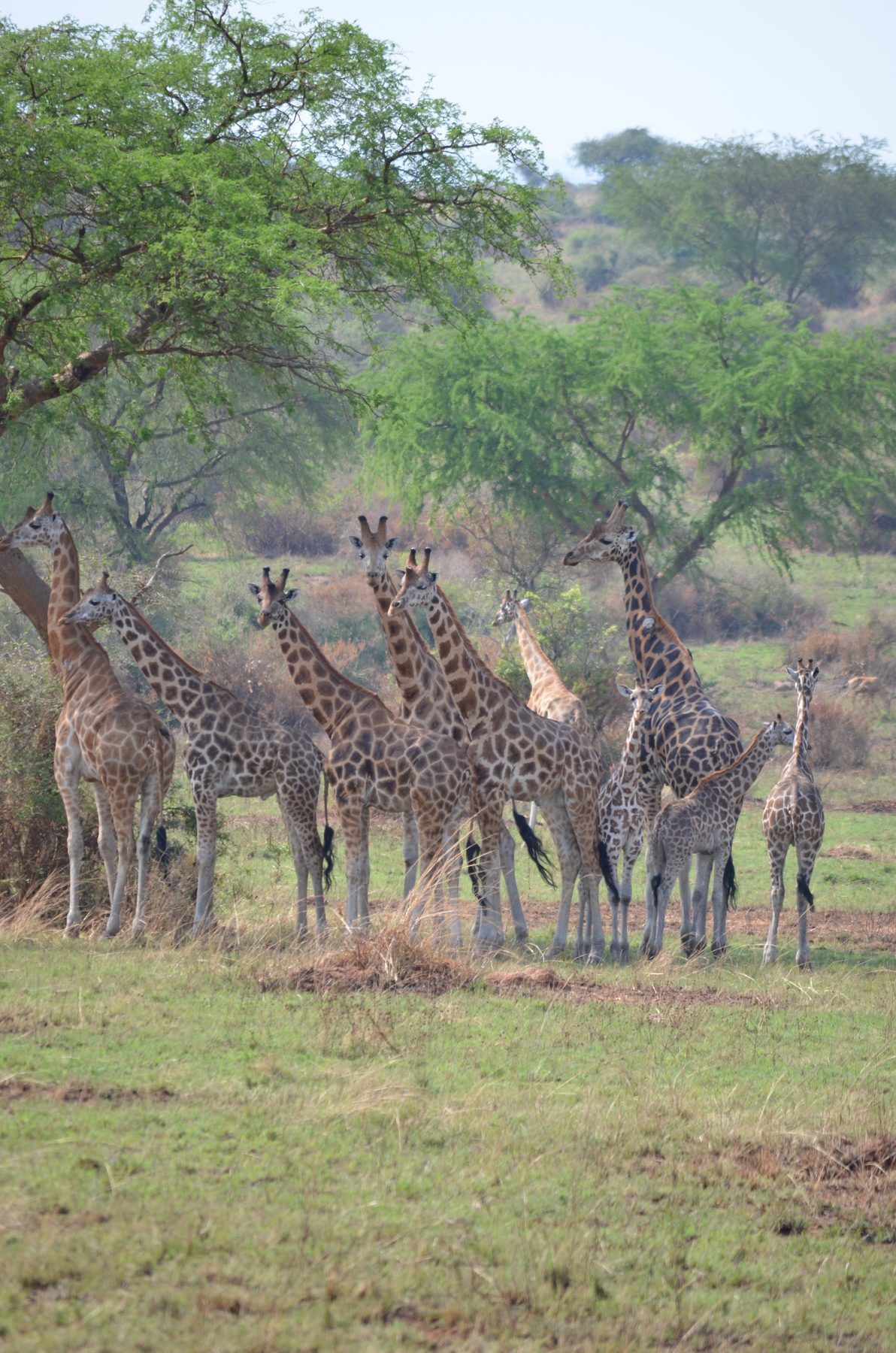
North of the river in Murchison, you can see a dozen at once. The park holds one of the largest populations left of this subspecies, and in Uganda you will only see them in Murchison, Kidepo and Lake Mburo.
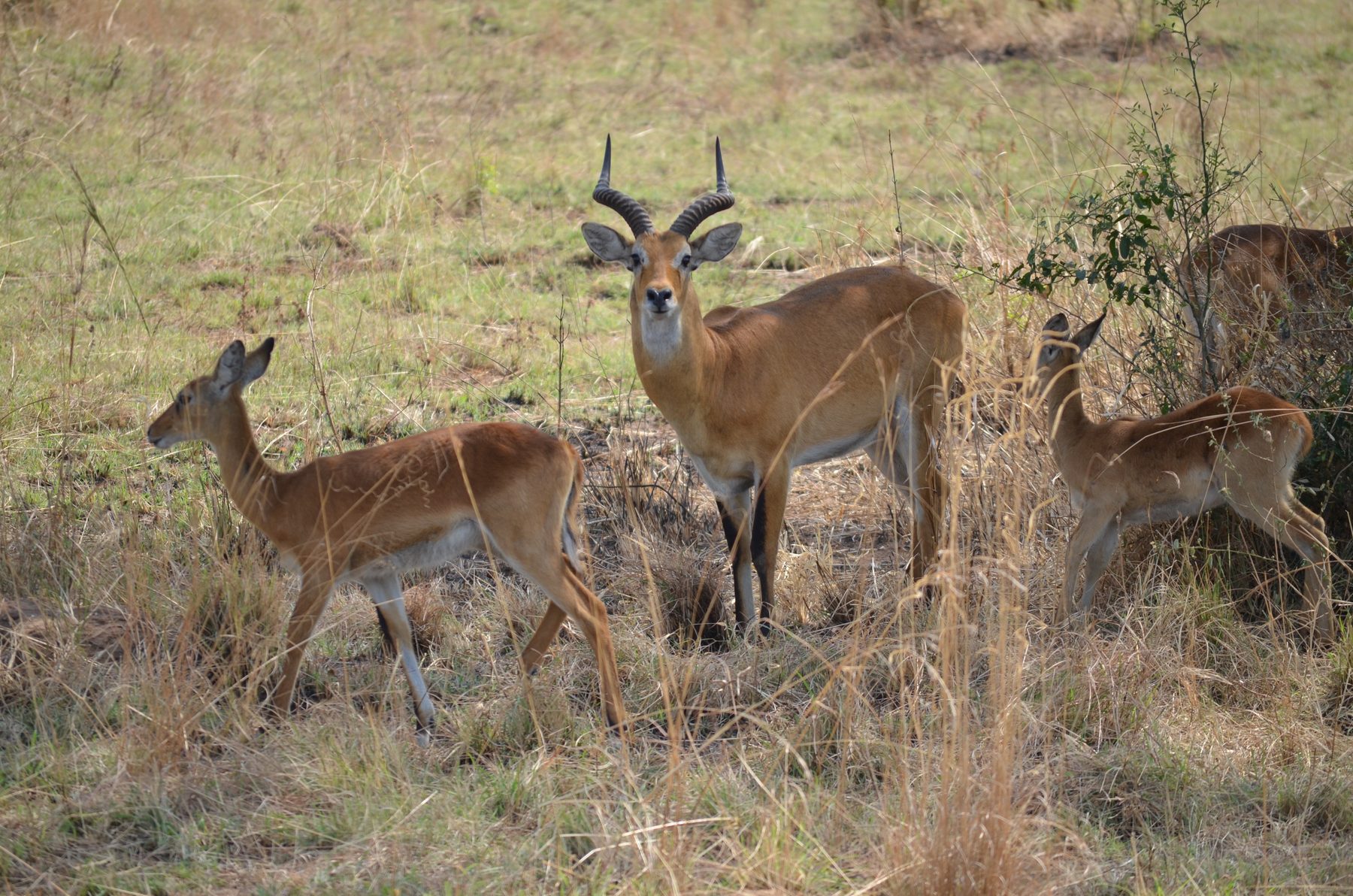
The antelope on Uganda's coat of arms, and the one you will see most. Big herds graze the open plains of Murchison and Queen Elizabeth, which is exactly why the lions are there too.
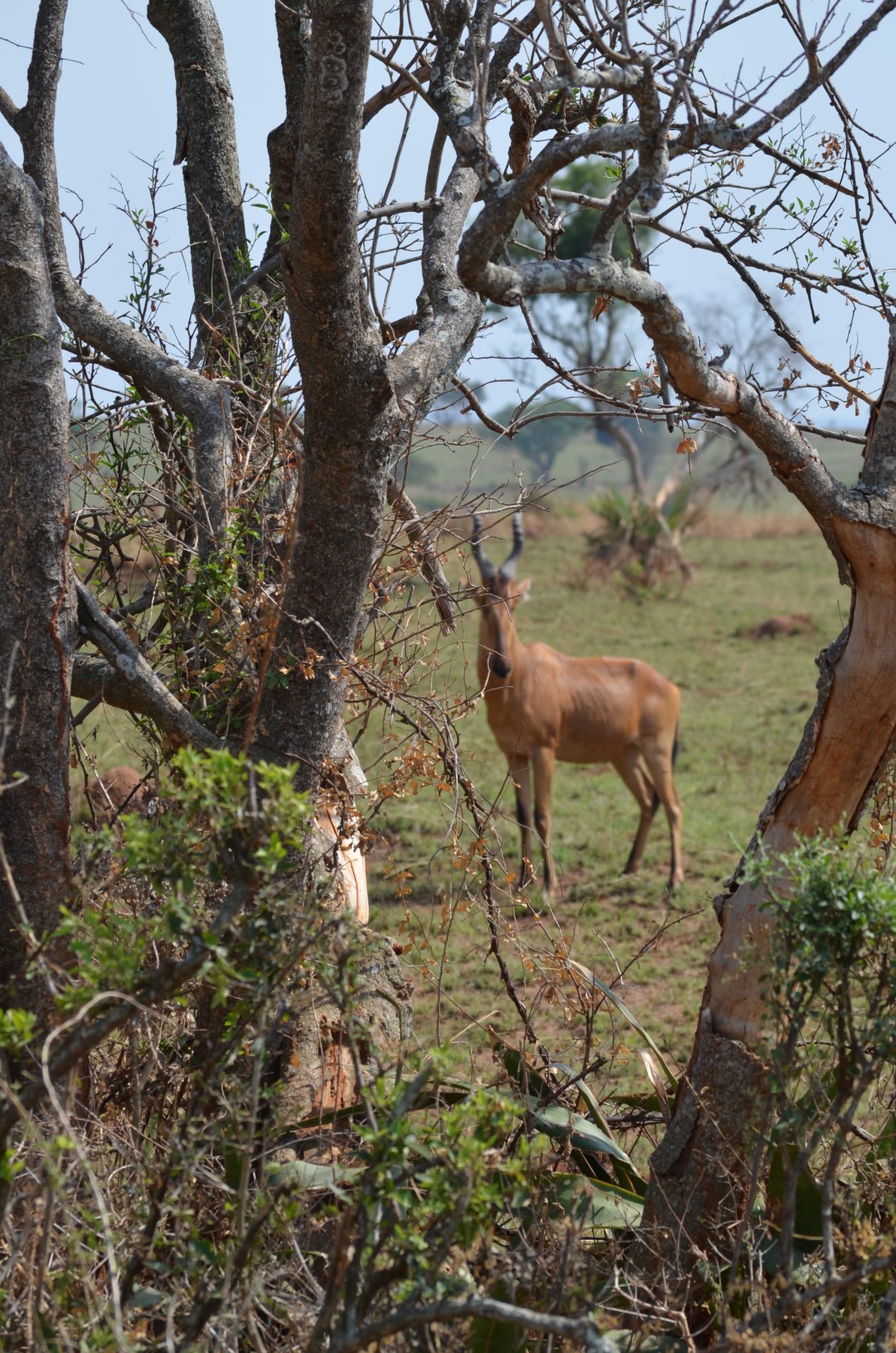
Long face, sloping back, and horns that look bolted on. Common on the Murchison grasslands, often standing on termite mounds to keep watch.
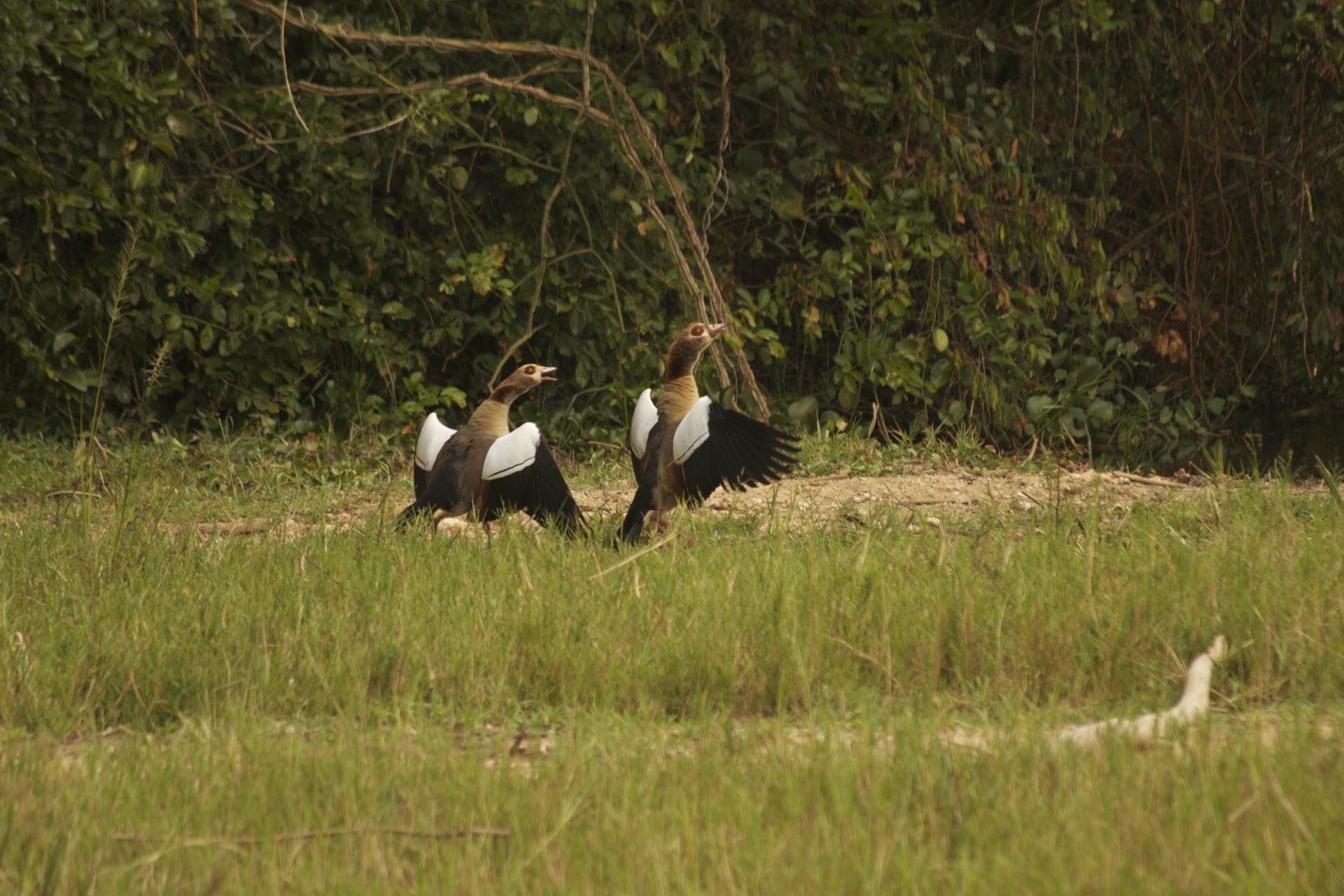
Loud, territorial and everywhere along the Nile. You will see pairs like this from the boat on the Murchison cruise, usually arguing with something bigger than them.
Murchison Falls and Queen Elizabeth have set 3-day prices, shown above. Anything else — Kidepo, a longer circuit, a luxury camp — we cost to the trip you want, because four people in a mid-range lodge for three days is a completely different price to two people in a tented camp for a week.
Every safari can start or finish in Jinja, which means the river is waiting at either end of it. Most guests spend a day on the water before they head west, or come back off the road and take a sunset cruise the same evening. It is the easiest way to see the Nile at both its wildest and its calmest.
Send us your dates, how many of you there are, and what you most want to see. We will put together an itinerary and a full price — including permits, lodges and every park fee — before you commit to anything.